The whole Mishnah, free to learn: the Hebrew with nikud, a clear English explanation of every sentence, a picture for the hard ideas, and an AI study partner whenever you get stuck.
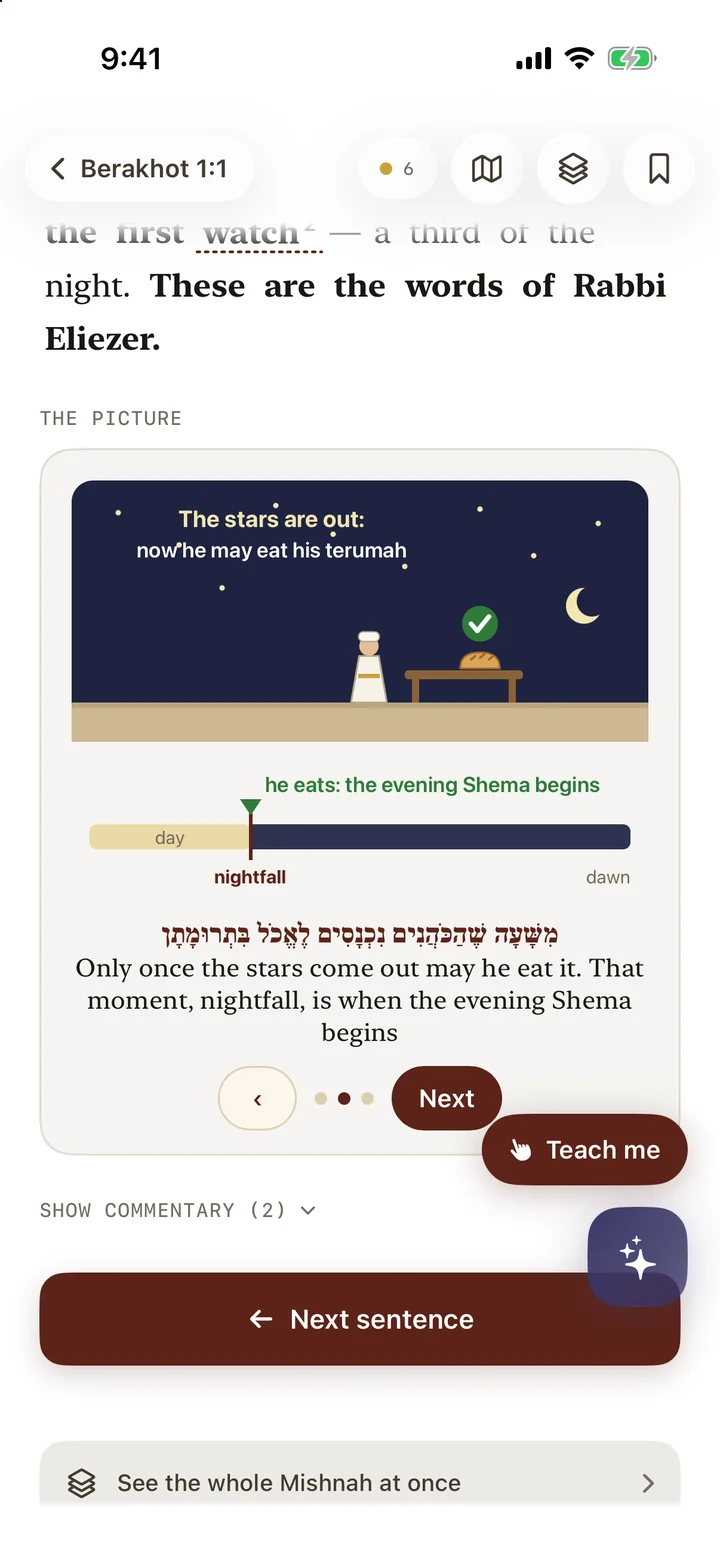
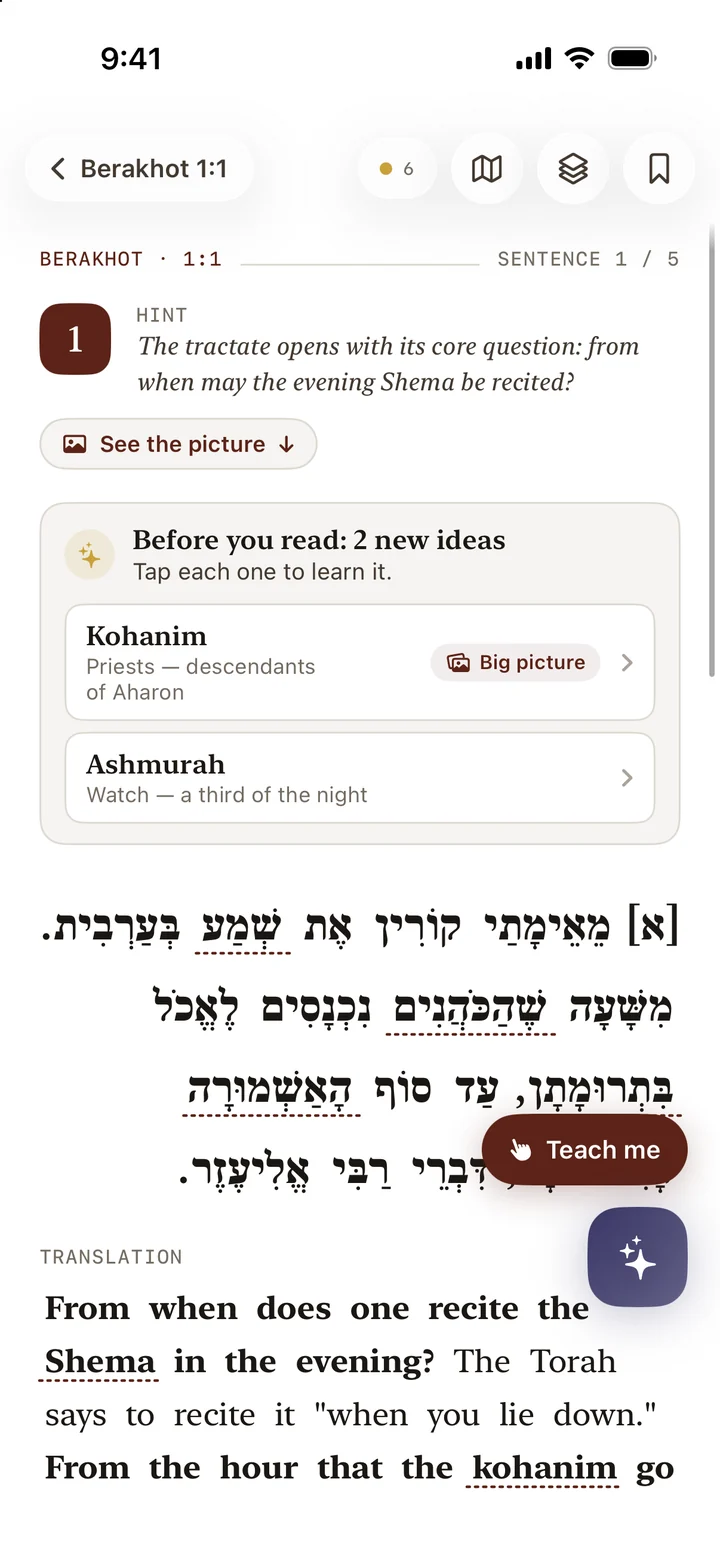
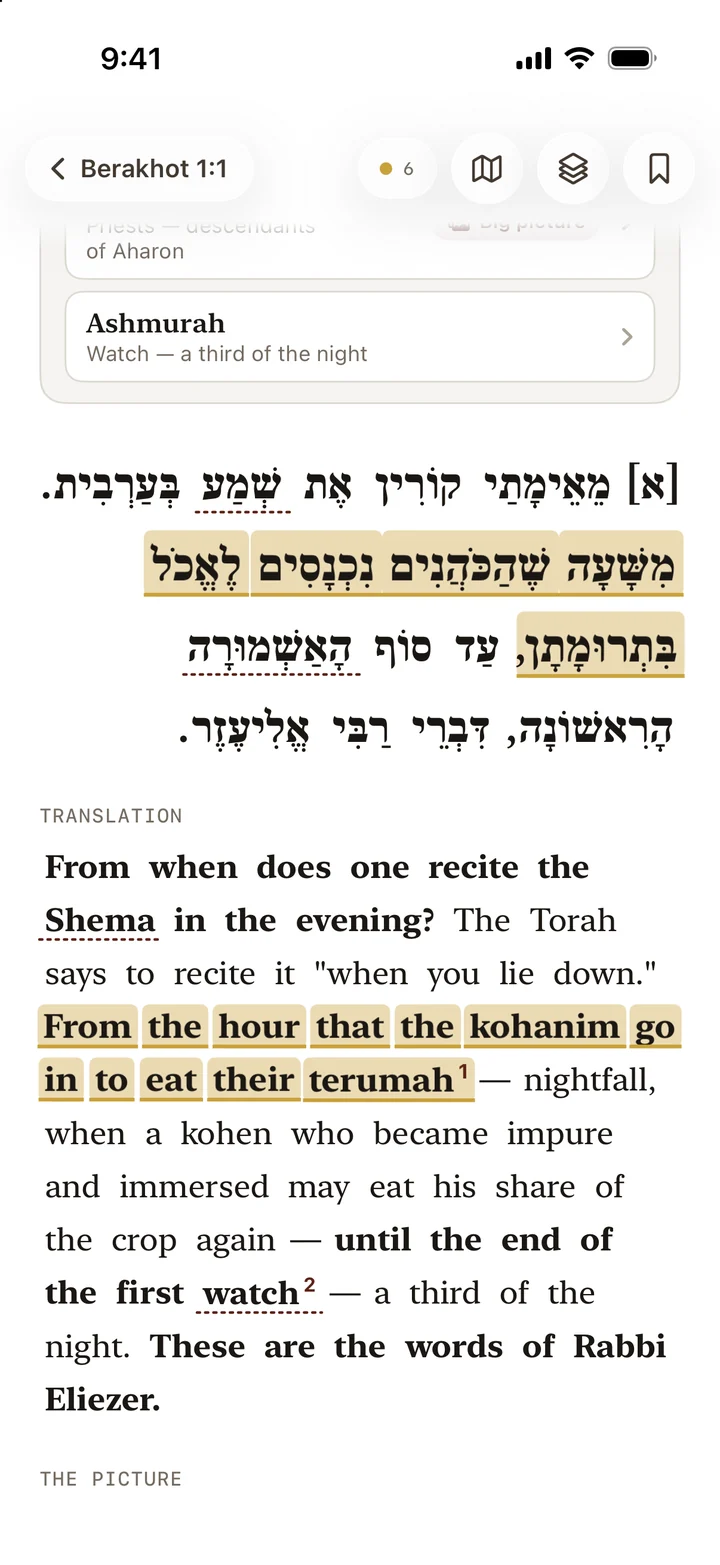
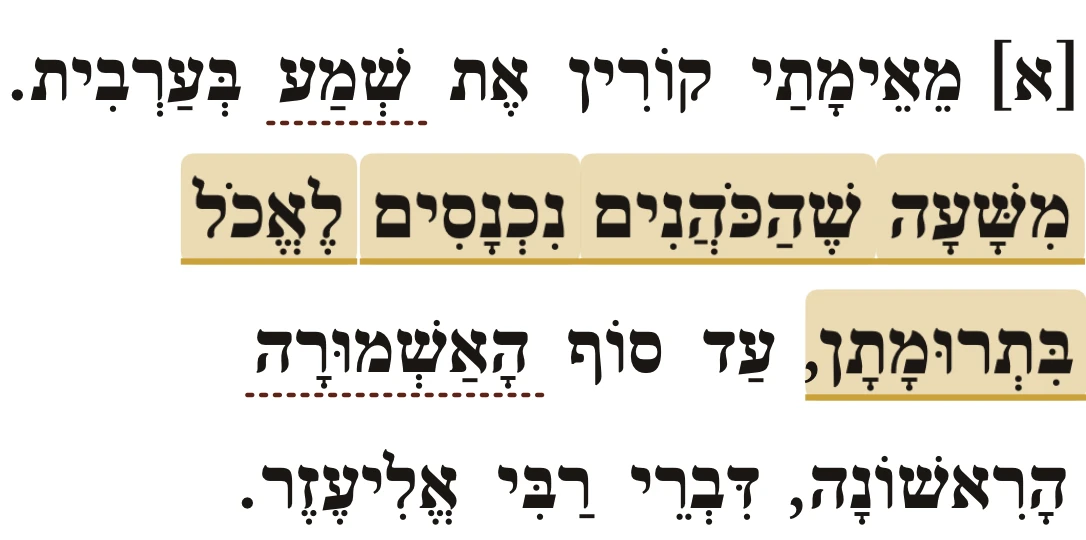
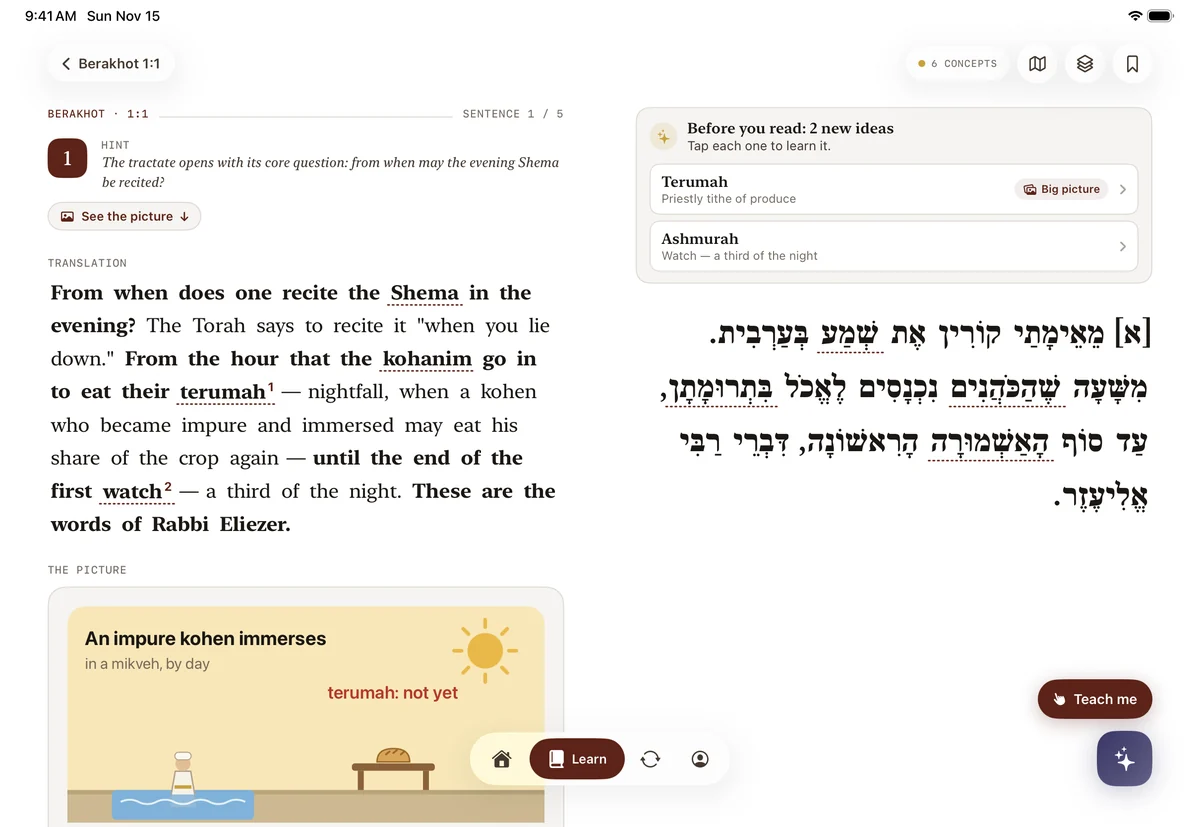
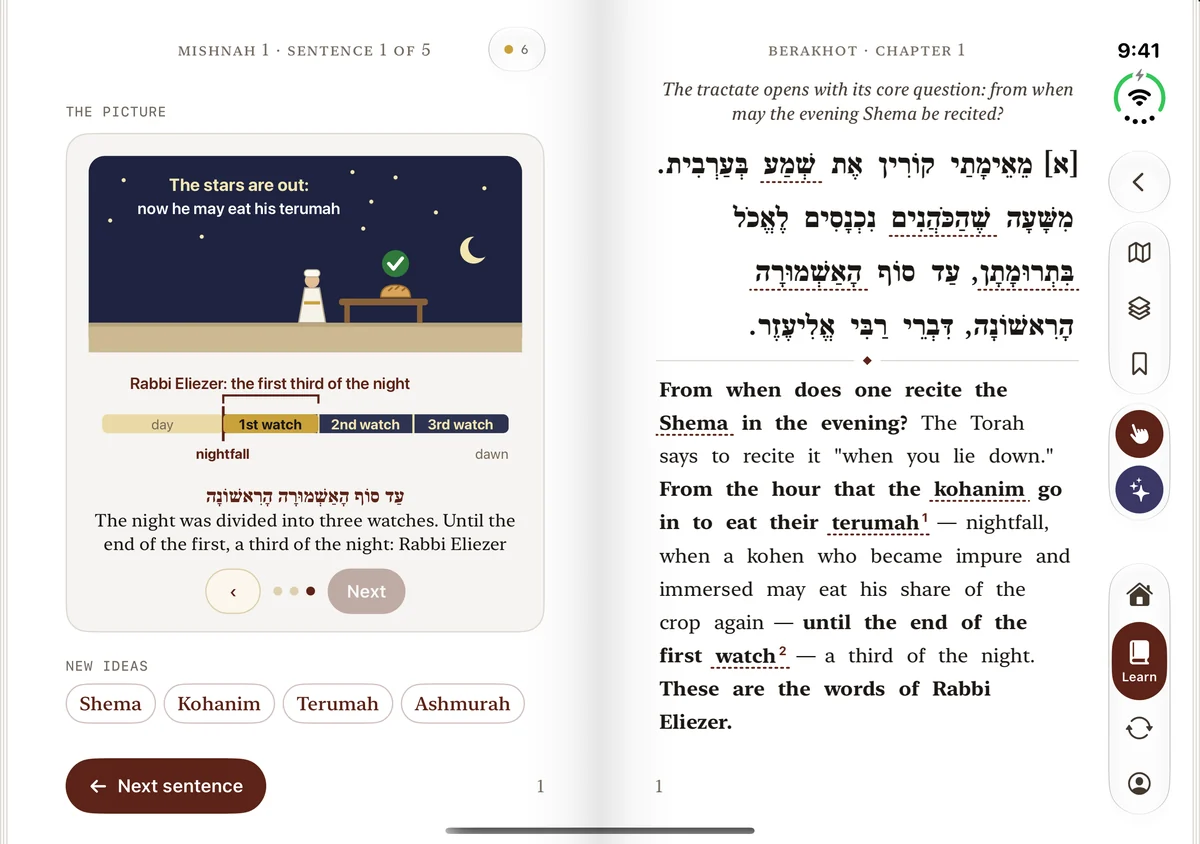
Berakhot 1:1, the first sentence, as the app teaches it. Tap a Hebrew word to see what it means, point at a bold phrase to light up the Hebrew it translates, and step through the picture.
Berakhot 1:1SENTENCE 1 / 5
1Start time and first deadline
The tractate opens with its core question: from when may the evening Shema be recited?
From when does one recite the Shema in the evening? The Torah says to recite it "when you lie down." From the hour that the kohanim go in to eat their terumah — nightfall, when a kohen who became impure and immersed may eat his share of the crop again — until the end of the first watch — a third of the night. These are the words of Rabbi Eliezer.
The Mishnah could have said simply "from nightfall." It uses the kohanim phrase to teach two things at once:
When Shema begins: nightfall — the moment three stars appear. This was the familiar time when a kohen who had been ritually impure during the day could finally eat terumah (the priestly portion of produce), after immersing in a mikveh and waiting for sunset.
A bonus law, taught in passing: a kohen whose purification would normally require an offering the next day (for example, after healing from tzaraat) may already eat terumah right after sunset on the day he immerses. He does not need to wait for the offering (Leviticus 22:7).
Bartenura · Rambam Commentary
עַד סוֹף הָאַשְׁמוּרָה הָרִאשׁוֹנָה
The night was divided into three watches (ashmurot), each about four hours long.
"End of the first watch" = one third of the night.
Why mark it this way instead of "four hours"? Because everyone could recognize the moment — the Gemara notes that the donkey brays at that hour.
From then on, Bartenura says, it no longer counts as the time of the Shema of lying down — the Torah's "when you lie down" (b'shochbecha) no longer applies.
The whole Mishnah reads like this on the web, free. The app adds Chavruta, Teach me, reviews and your place.
1
TAP ANY WORD
Tap any word. Know what it means.
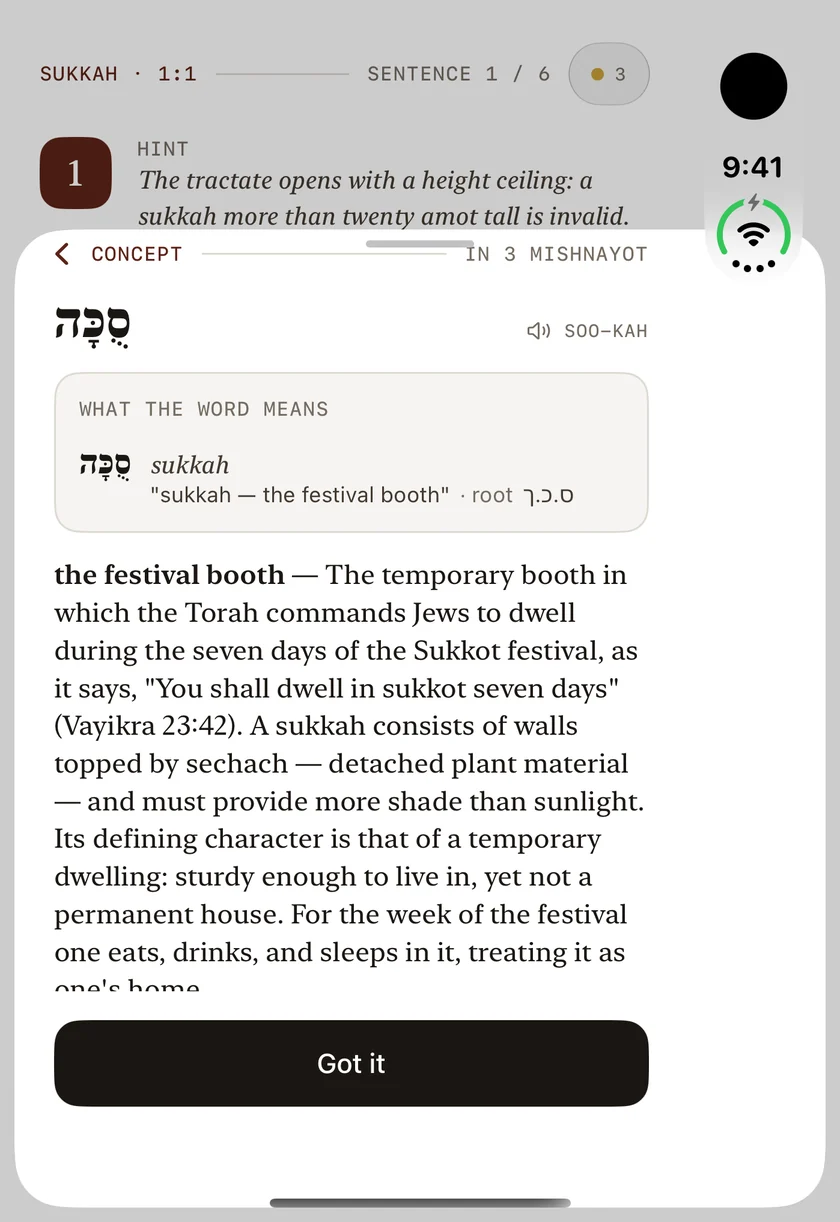
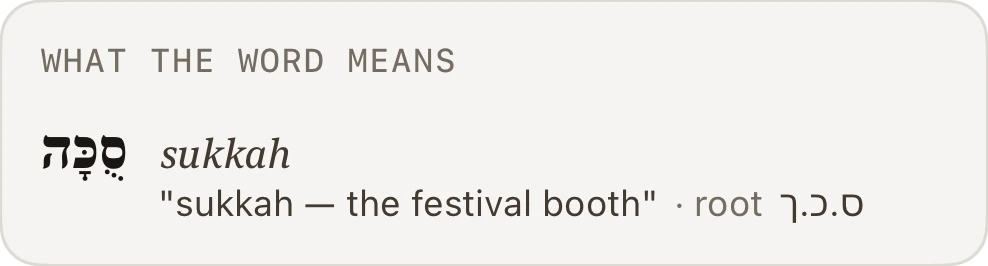
Not sure what a word means? Tap it. A bar slides up with how to say it, what it means here, and its root, with a button to hear it. Words that carry a whole idea open a card that explains the idea and why it matters in this mishnah.
Meaning, root and pronunciation for every word
Tap a bold phrase and its Hebrew lights up
Nikud on or off, whenever you want it
2
THE BIG PICTURE
New idea? See the big picture.
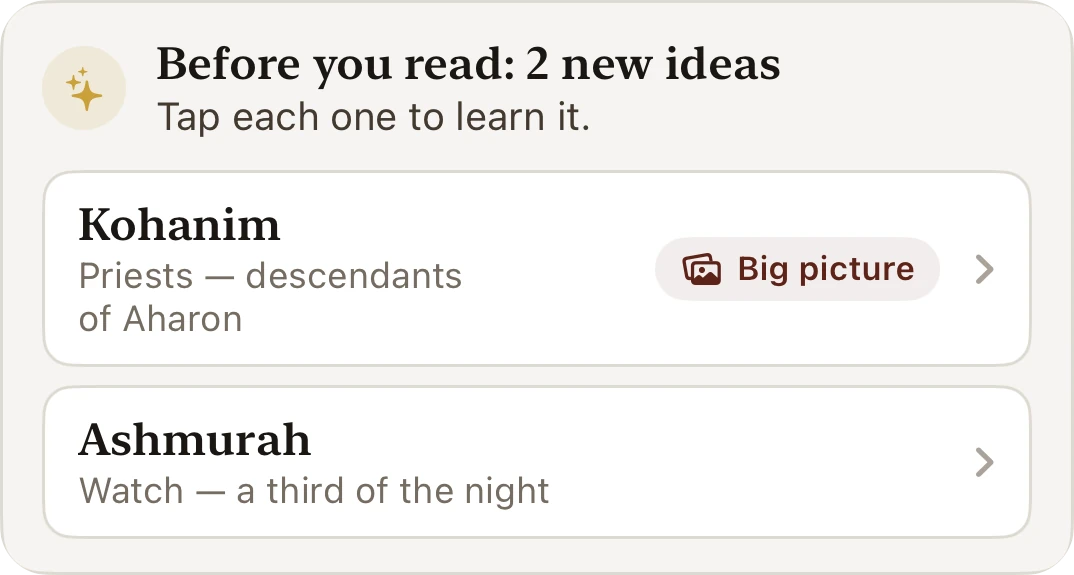
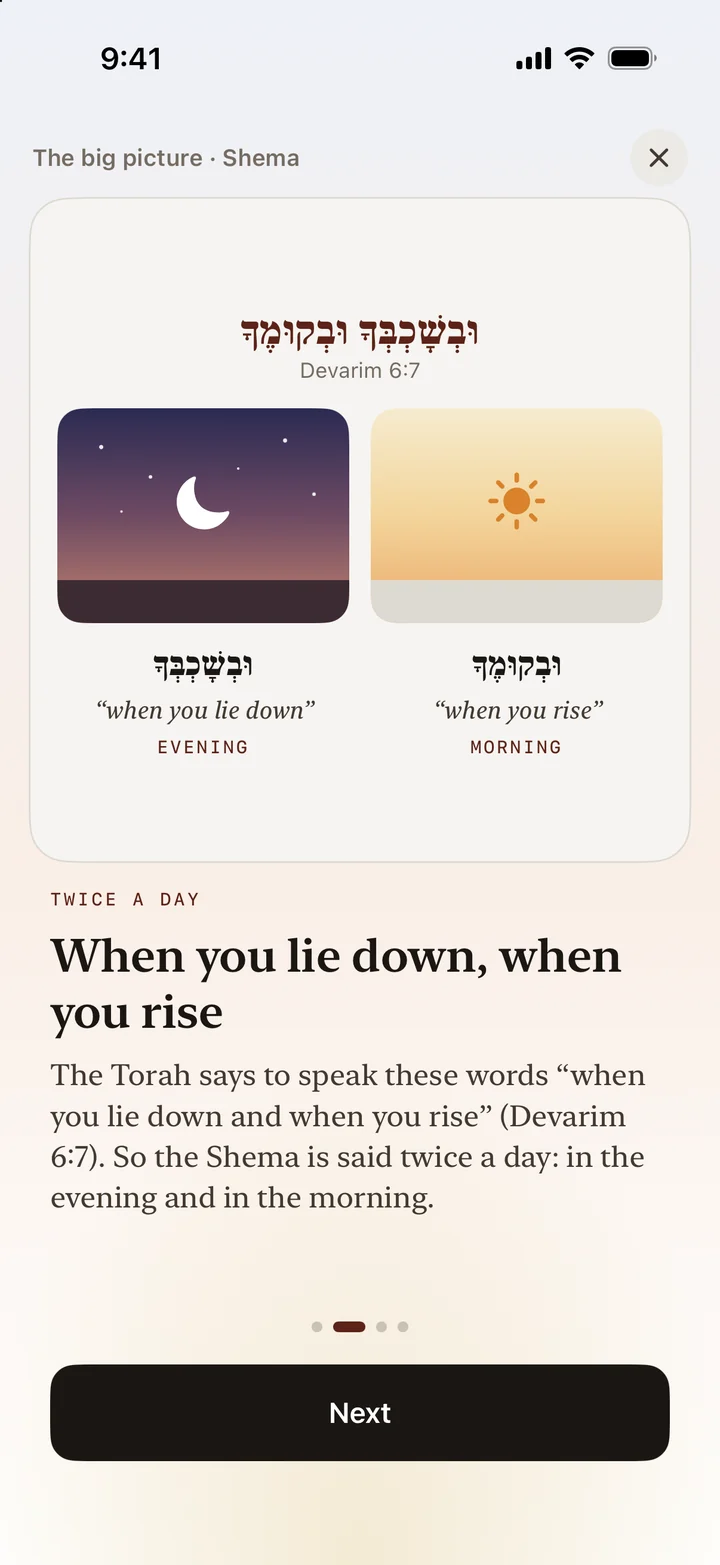
Before each sentence, Mishnah Max lists the ideas it assumes you know: Shema, kohanim, terumah. The big ones open a short deck of picture cards, so you meet an idea once, properly, before you need it.
The new ideas, listed before you read
Picture decks for the ideas the whole Mishnah leans on
A personal glossary of the 1,000 concepts, as you meet them
3
TEACH ME
A lesson, right on the page.
Tap Teach me and your Chavruta teaches the mishnah where you're reading it. It lights up each phrase in the Hebrew and the English together, explains it, and steps through the picture as it goes. Stop it any time to ask.
4
YOUR AI STUDY PARTNER
Stuck? Ask your chavruta.
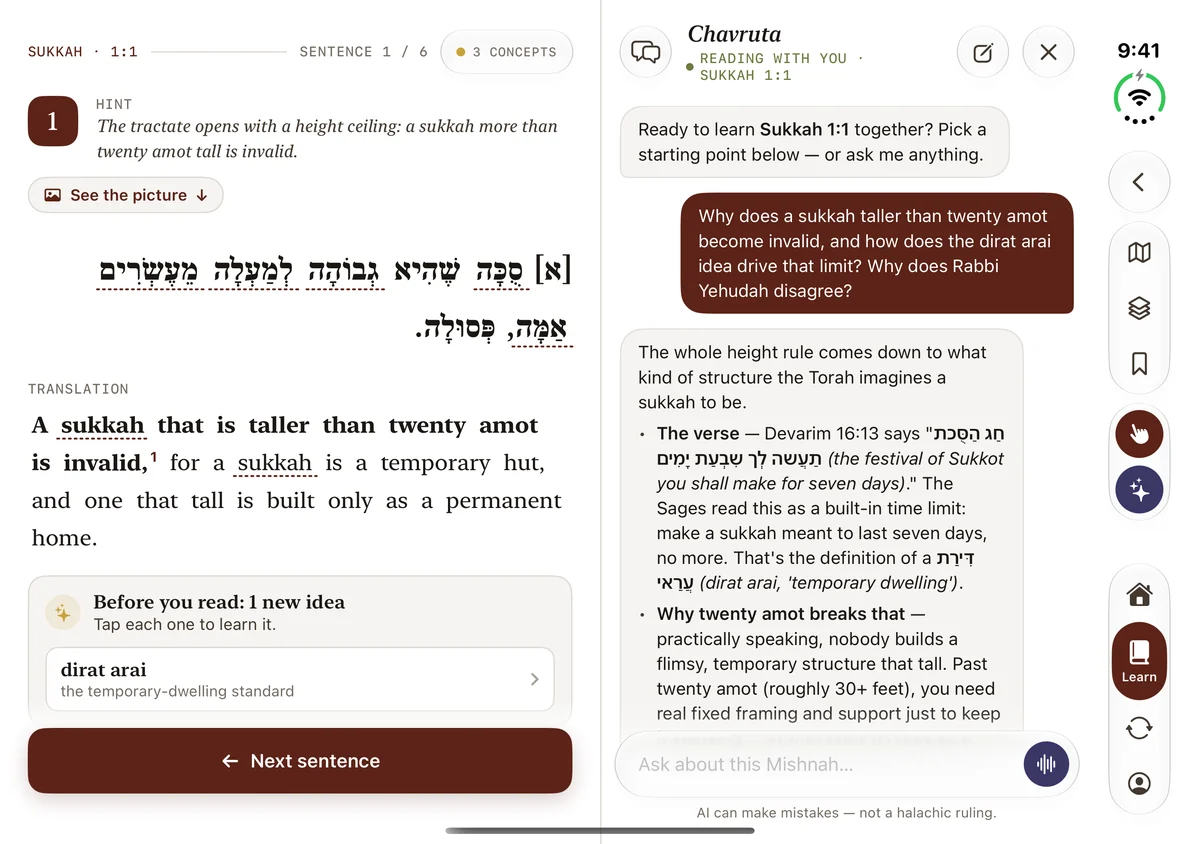
Your Chavruta is an AI study partner that knows exactly which mishnah you're on. Ask why the Sages disagree, what a term means, or how a law works, and get an answer in plain language, grounded in the classic commentaries. Ask it to map the night, and it draws you a diagram to keep.
AI can make mistakes. A learning companion, not a halachic ruling: ask your rabbi.
5
LEARN IT, KEEP IT
Learn it. Then keep it.
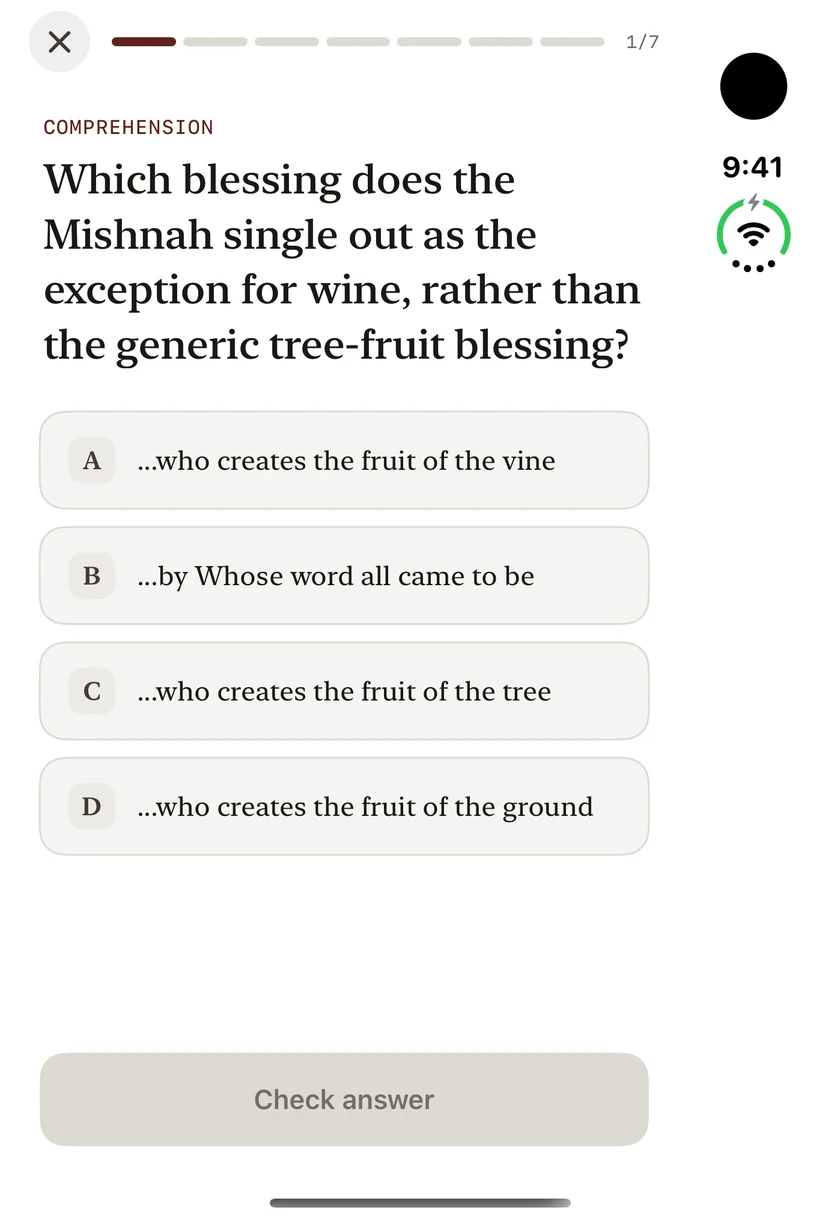
Every mishnah ends on a page that shows the path you just walked and sums it up. Then a one-minute Mishnah Check, and reviews that bring it back before you forget.
A summary page after every mishnah
A quick Mishnah Check, with the why behind each answer
Perek reviews and spaced review
6
THE WHOLE MISHNAH, MAPPED
Always know where you are.
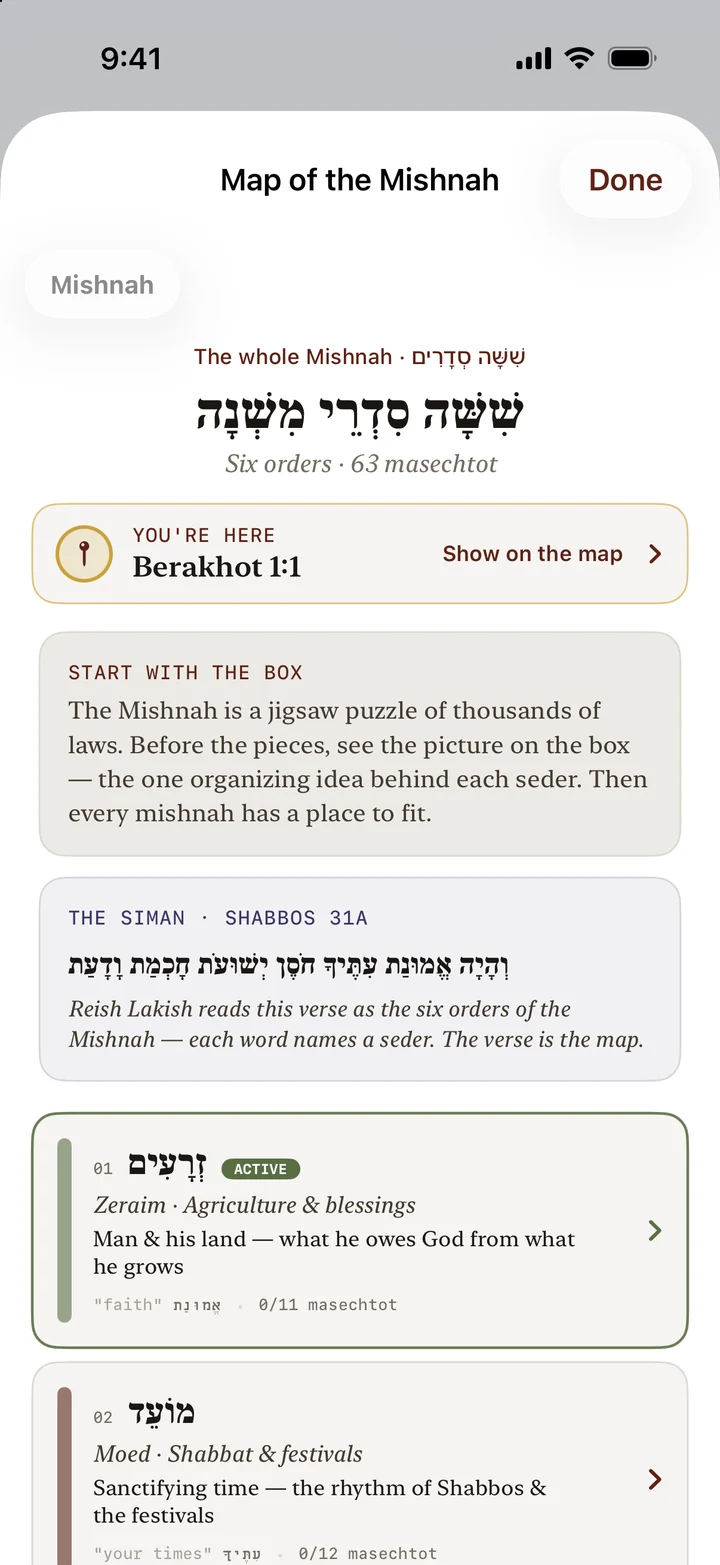
Every mishnah has a map: the question it answers and the steps it takes to get there. Zoom out and the Siman Map shows how each perek, tractate and seder fits into the whole of Shas, with one word to remember each perek by.
7
FULLY BILINGUAL
Learn it all in Hebrew, too.
Prefer Hebrew? The entire app, explanations included, is available in Hebrew. Read fluently? Turn off nikud and commentary for a clean page. Just starting? Keep everything open and go at your own pace.
Commentary, when you want it
Short notes under each sentence, led by Bartenura, explain the reasoning behind the text. Keep them open while you're starting out, or tuck them away once you're reading on your own.
A daily habit
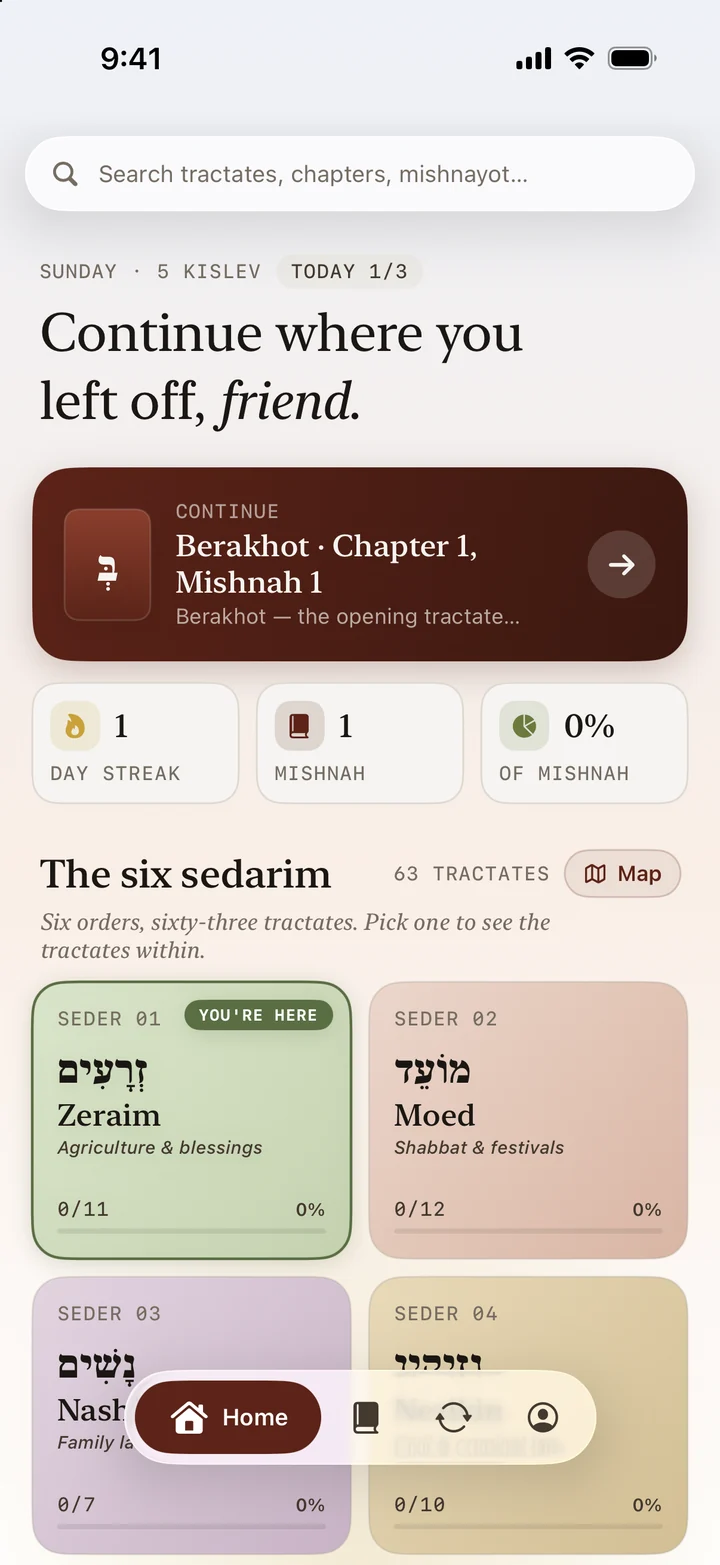
Pick a pace: one mishnah a day, three, five, or whenever you like. Get a gentle reminder at the time you choose, and keep your streak going.
Already learned some?
Mark the tractates and perakim you've learned, and they join your reviews at a gentle pace.
SIX SEDARIM · 63 TRACTATES
Start anywhere.
Every tractate is open, in the app and here on the web. Pick a seder to see its tractates.
The page is laid out for the device in your hand, and your place, streak and reviews follow you between them.
Ready for iPhone Duo
IPAD
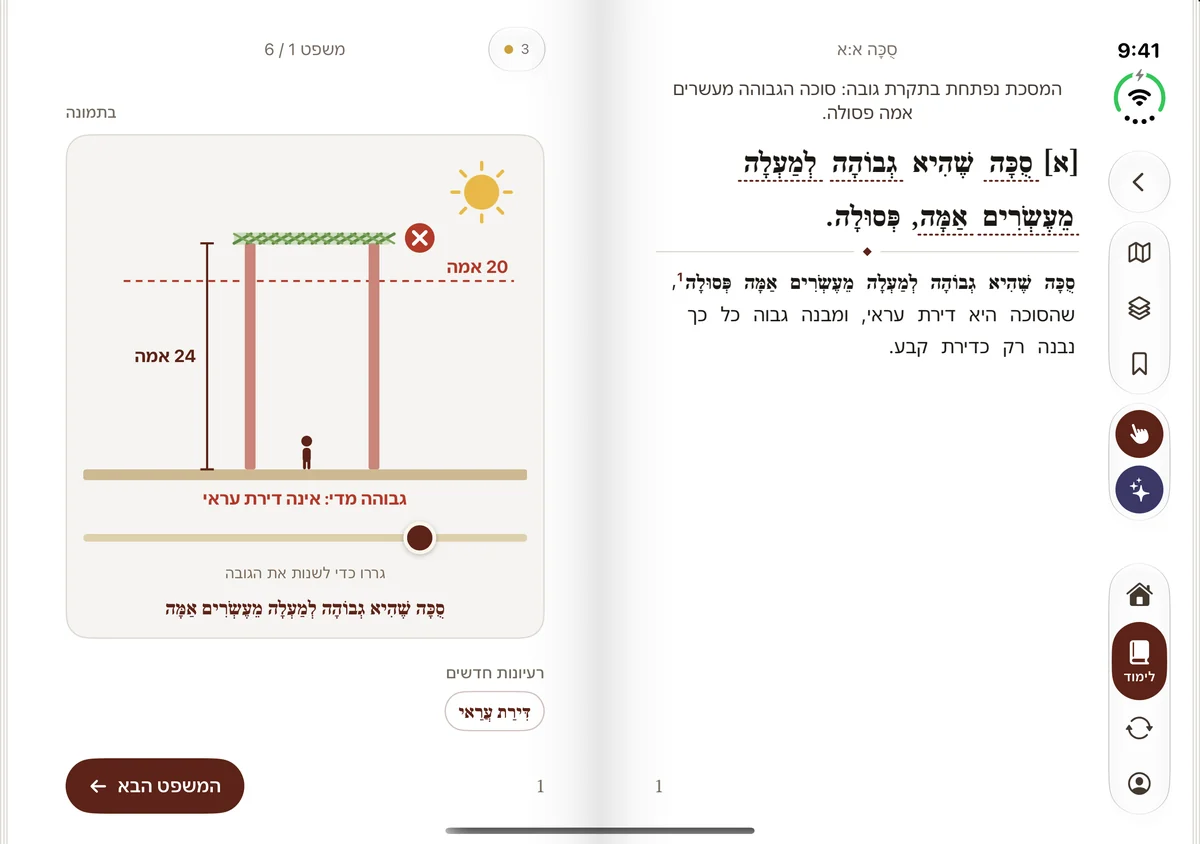
Turn it sideways and it opens like a book: the explanation and its picture on one page, the Hebrew facing it.
IPHONE DUO
Opens like a sefer. Unfold it for pages side by side, with the tabs down the side like a book's spine.
IPHONE
One sentence at a time, in your pocket, in English or entirely in Hebrew.
HOW THE MISHNAH CAME TO BE
From Sinai to your screen.
The app opens with this story, in eight pictures. Here it is.
SINAI · YEAR 2448 OF 6,000
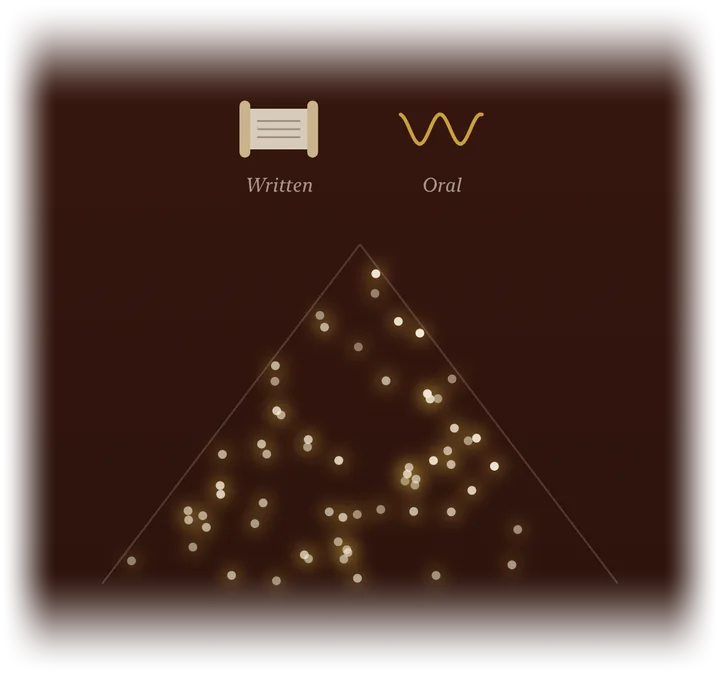
The Torah, written and oral
At Sinai, Moshe received the Written Torah — and with it an Oral Torah, the explanation of how its words are lived. The written was set down in a scroll. The oral was taught by heart.
HAND TO HAND
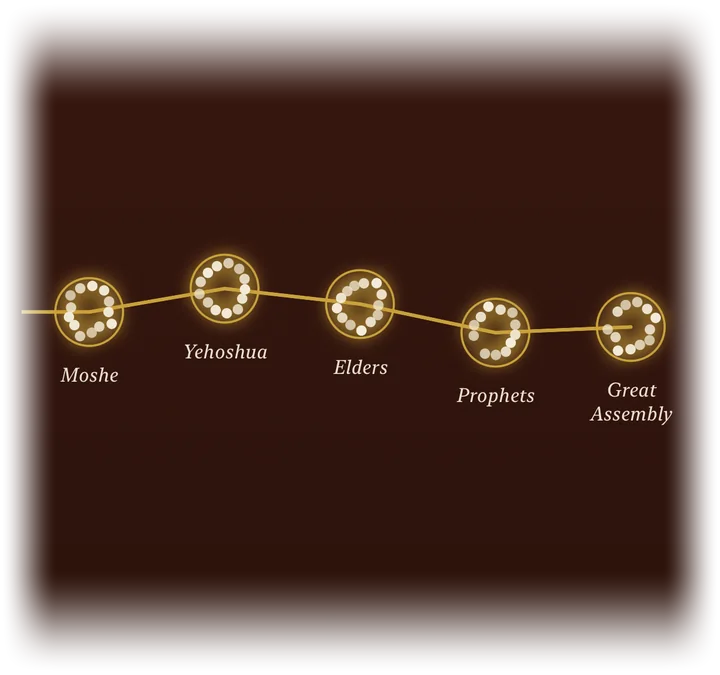
A chain of teachers
Pirkei Avot opens with the chain: Moshe received the Torah at Sinai and handed it to Yehoshua; Yehoshua to the Elders; the Elders to the Prophets; the Prophets to the Men of the Great Assembly.
YEAR 3728 OF 6,000 · HILLEL AND SHAMMAI
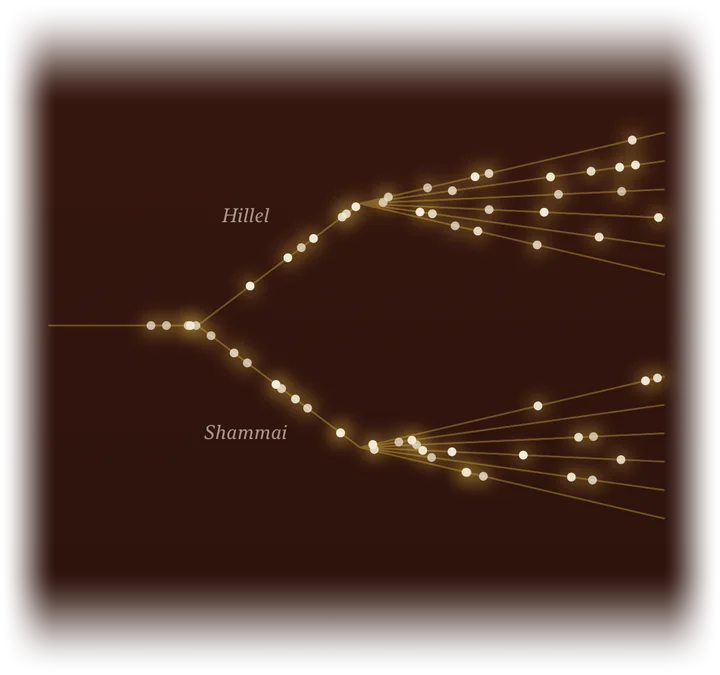
One Torah, two schools
After the Great Assembly, the Sanhedrin was led by pairs of sages — a president and a head of the court — generation after generation. The last pair was Hillel and Shammai. Many of their students didn’t stay with their teachers long enough and relied on their own understanding, and disagreements grew.
YEAR 3829 OF 6,000 · THE TEMPLE FALLS
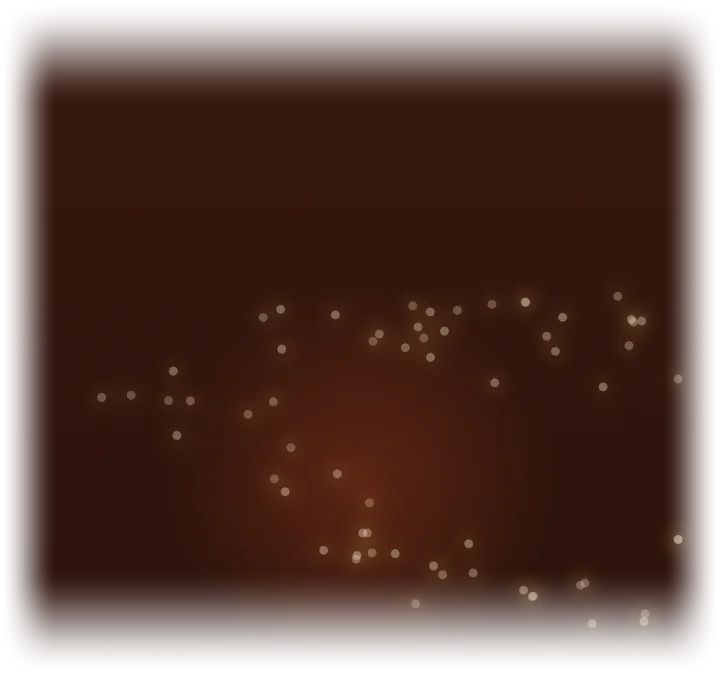
A tradition at risk
The Second Temple was destroyed, and the people were scattered and persecuted. The Oral Torah had always passed from teacher to student by word of mouth. Now it was in danger of being forgotten.
AROUND 3949 OF 6,000 · RABBI YEHUDAH HANASI
Gathered and set down
Seeing the danger, Rabbi Yehudah HaNasi — known simply as “Rebbi” — gathered the teachings of the generations and arranged them in one work: the Mishnah, in six orders.
INSIDE THE MISHNAH · SHABBAT
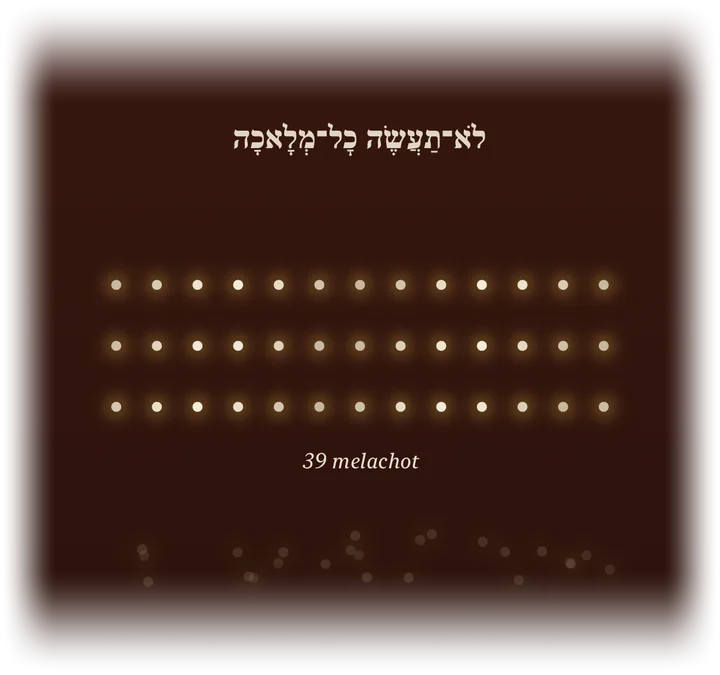
“Do no work.” But what is work?
The Torah forbids melachah — work — on Shabbat, but never says what counts. Writing? Baking? Carrying? The Mishnah answers: “The primary labors are forty less one,” and names all thirty-nine.
INSIDE THE MISHNAH · TEFILLIN
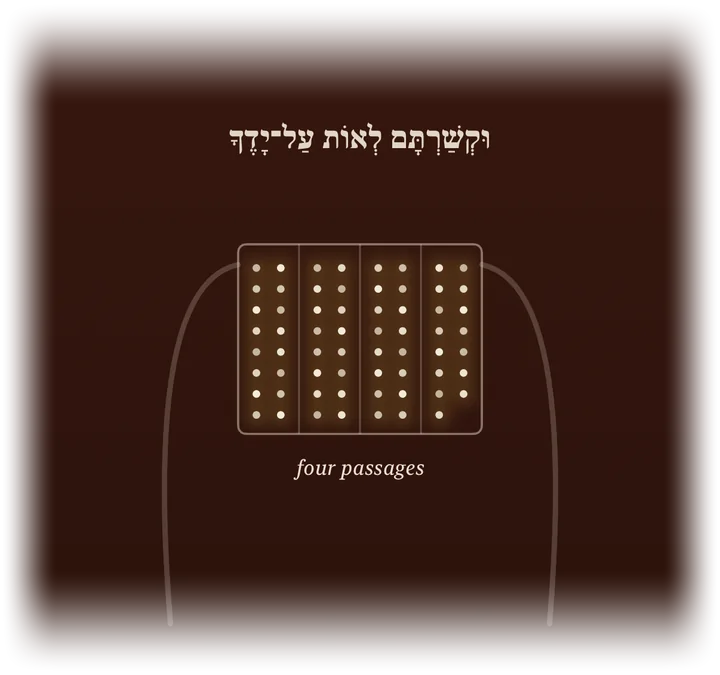
“Bind them on your hand.” Bind what?
The Torah says to bind “these words” on your hand and between your eyes — but not which words, or in what. The Mishnah knows: four passages, all four required, down to a single letter.
TODAY · YEAR 5787 OF 6,000
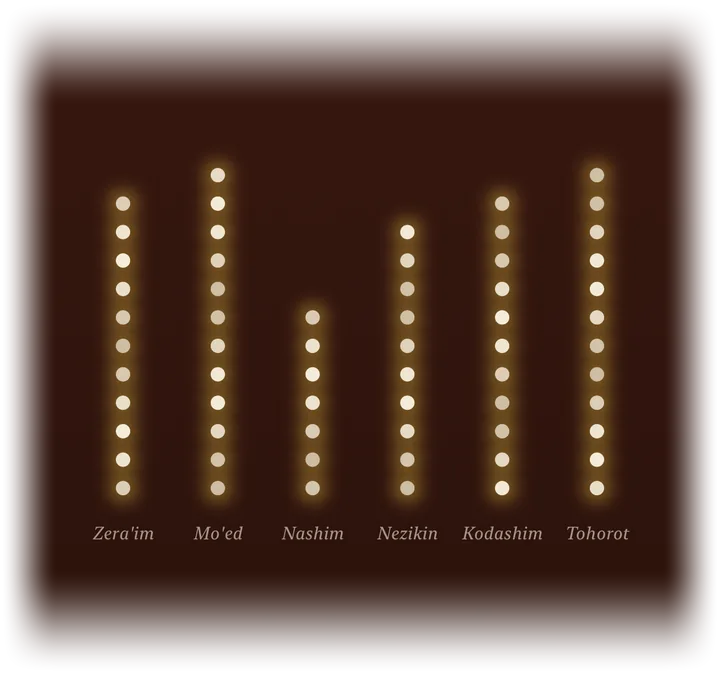
Six orders. 63 tractates. 4,192 mishnayot.
The sages of the Talmud built upon it, and every commentator since — Rashi, Rambam, Bartenura — built upon them. Each generation learned it and handed it on. Now the chain reaches you.
PRICING
Learning is free.
The whole Mishnah is open to everyone. Pro is only for learning with the AI as much as you like.
Always
Free
All six sedarim and 63 tractates
Hebrew with nikud and an explanation of every sentence
The pictures, and the big picture decks
Tap any word for its meaning, root and pronunciation
Bartenura-led notes
Summary pages, Mishnah Checks, Perek reviews and spaced review
Mishnah maps and the Siman Map
Sync across your devices
Your AI study partner and teacher
Mishnah Max Pro
Up to 50 Chavruta questions a day
Teach me lessons on the page
Diagrams Chavruta draws for you
New learners can try Chavruta before subscribing. Prices are shown in the app.
QUESTIONS
Good questions.
Is it really free?
Yes. All six sedarim, all 63 tractates, every explanation, picture, note, quiz and review are free. Pro is only for the AI features: Chavruta and Teach me. New learners can try them before subscribing.
Do I need to know Hebrew?
No prior knowledge required. Every sentence comes with a clear English explanation woven into the translation, and you can tap any Hebrew word for its meaning, root and pronunciation. Keep nikud on while you're learning to read, and turn it off when you don't need it.
Can the AI tell me the halacha?
No. Chavruta and Teach me are learning companions, not a source of halachic rulings, and AI can make mistakes. For practical questions, ask your rabbi.
Which commentaries does it use?
The notes under each sentence are led by Bartenura, the classic commentary printed alongside the Mishnah, and the pictures draw his explanation. Chavruta's answers draw on the traditional commentaries on the Mishnah.
Where do I start?
Wherever you like: Berakhot from the beginning, Pirkei Avot, the tractate of the coming festival, the Mishnah Yomit cycle, or any of the 63 tractates. Already learned some? Mark it as learned and it joins your reviews.
Does my progress sync?
Sign in with Apple or Google and your place, streak and reviews follow you between your iPhone, iPad and iPhone Duo.
Is it on Android, or the web?
The app is for iPhone, iPad and iPhone Duo. On any other device, the whole Mishnah, with its explanations, pictures and notes, is free to read here on the web. Read on the web
How do I get help or delete my account?
Everything is on the support page, including how to delete your account and manage a subscription. Go to Support